Completed project · Ukraine · 2022–2024
Ukraine Hemp and Housing
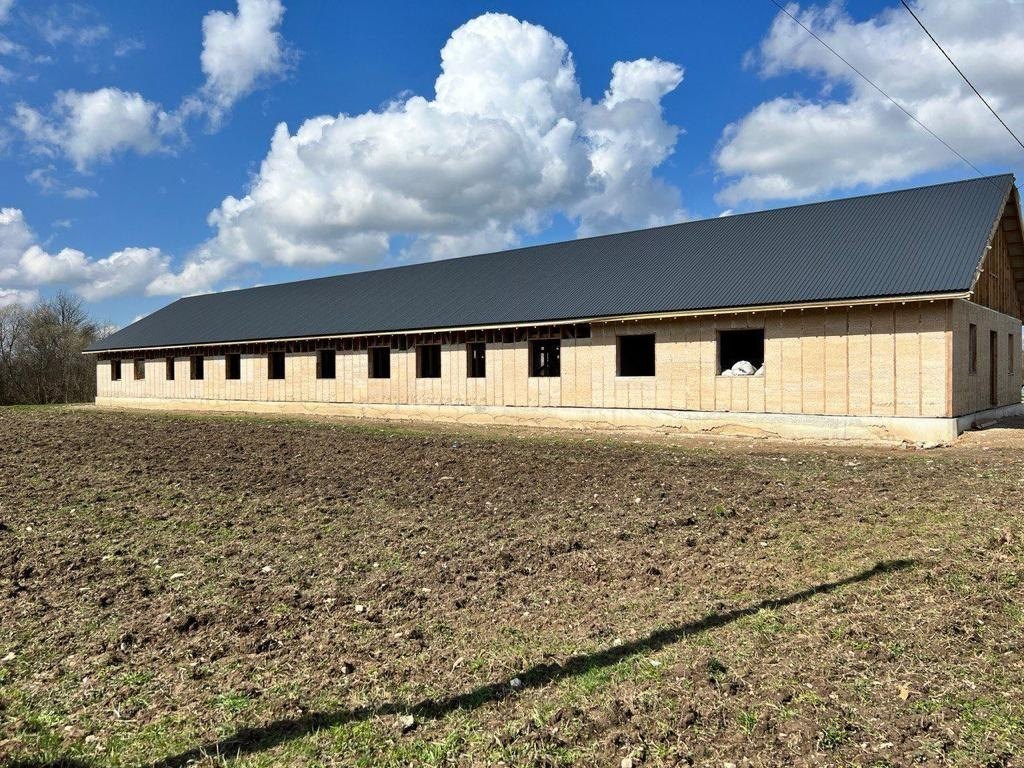
Housing for 170 people displaced by war, built with hempcrete around load-bearing timber frames in the Lviv region.
This completed pilot shows a practical, humanitarian use of biobased construction. Hemp Technology LLC used locally grown industrial hemp to help create housing for families displaced by war. Tao Climate reports that the project used 620 tonnes of hempcrete and delivered a net carbon gain of 500 tonnes CO2e once crop uptake, material use and project emissions were considered together.
Completed construction and reported project outcomes. The 500-tonne figure is Tao Climate's reported net carbon gain, not a claim that credits have been issued, independently verified or made available for purchase. This project is not listed as available credit inventory or a future-supply forecast.
PROJECT OUTCOME
A climate project with a direct human outcome
The lead outcome of this pilot is simple and concrete: housing for 170 people displaced by war. The project linked climate-positive construction with an urgent housing need, showing how hemp-based materials can contribute both to shelter and to lower-carbon building approaches.
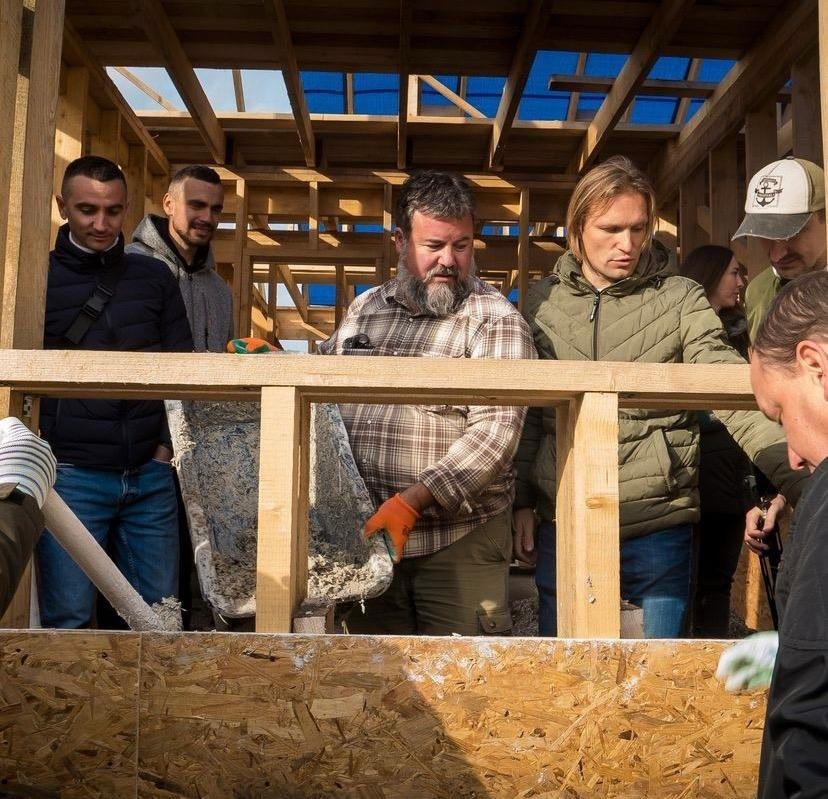
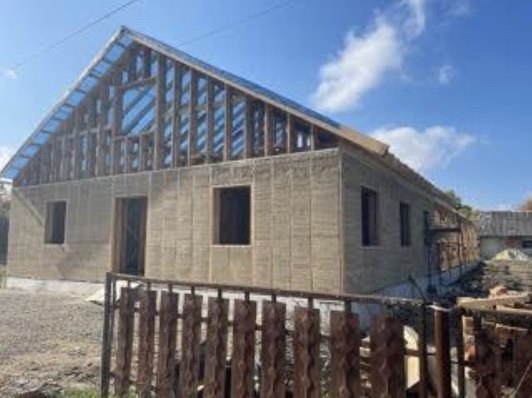
The photographs below show the project team placing hempcrete around a structural timber frame and the building envelope taking shape. The method created thick, insulating wall infill while keeping the timber structure as the primary load-bearing element.
- Humanitarian housing delivered in the Lviv region
- Biobased wall system using industrial hemp shiv and lime
- Construction evidence captured in field photography and project records
- Project data later used in Tao Climate's XPRIZE Carbon Removal submission
WHY HEMPCRETE
What makes hempcrete interesting
Hempcrete is a bio-composite made by mixing the woody inner core of the hemp stalk, known as shiv, with a mineral binder and water. It is used as an infill material rather than a structural frame. In the Ukraine pilot, the timber structure carried the load while hempcrete formed the surrounding wall build-up.
The material is valued because it is lightweight, insulating and based partly on plant matter that absorbed carbon while growing. In buildings, hempcrete can help create walls that buffer temperature swings and support a lower-carbon material story than many conventional options.
For this project, the team used a mix of four parts hemp stalk shiv, one part lime and one part water. The damp material was placed around the timber frame and allowed to cure in place.
HOW IT WAS BUILT
From frame to finished wall
- Timber frame erectedThe load-bearing timber structure defined the building geometry and carried the roof and floor loads.
- Formwork installedTemporary boards created cavities around the frame to receive the hempcrete mix.
- Hempcrete placedThe shiv, lime and water mix was packed into place around the timber members.
- Walls cured and driedAs moisture dissipated and the binder set, the wall built up into a stable, insulating envelope.
CARBON ACCOUNTING
How the reported 500 tonnes CO2e was derived
The project record covers 620 tonnes of hempcrete, consisting of 120 tonnes in the 2022 record and 500 tonnes in 2023. Tao Climate's explanation focuses on the hemp-derived fraction of the mix, because that plant material absorbed carbon while growing.
The methodology summary states that the hemp fraction was treated as having a carbon content of 44%. To convert stored carbon into an equivalent mass of CO2, the calculation used the factor 3.67, the ratio of the molecular mass of CO2 to the atomic mass of carbon.
The result presented publicly is Tao Climate's reported net carbon gain of 500 tonnes CO2e. It should be read as a reported project outcome, not as issued or saleable credits.
WHY THE PILOT MATTERED
Key wins from the project
- Real-world humanitarian impact: the project helped house people displaced by war.
- Demonstrated hempcrete delivery: it showed the construction sequence from crop-derived material to installed wall system.
- Clear public metrics: 620 tonnes of hempcrete and a reported 500 tonnes CO2e net gain give the pilot a concrete evidence story.
- Better market narrative: the project connects carbon removal, biogenic storage and climate-positive construction in a way buyers can understand.
- Research value: project data informed Tao Climate's selection as an XPRIZE Carbon Removal Phase 2 Top 100 team.
PROJECT FILM
Watch the Ukraine project
See the construction process and hear more about the pilot in the project film.
Watch the Ukraine hempcrete project film on YouTube ↗
Data from this pilot fed into Tao Climate's XPRIZE Carbon Removal work and supported its selection as a Phase 2 Top 100 team.